COP31 Ends Without Major Climate Deal as Fossil Fuel and Finance Disputes Persist
The UN climate conference in Turkey concluded without a final political agreement after deep divisions over fossil fuel references and financial commitments for poorer nations.
By Pablo Medina ·
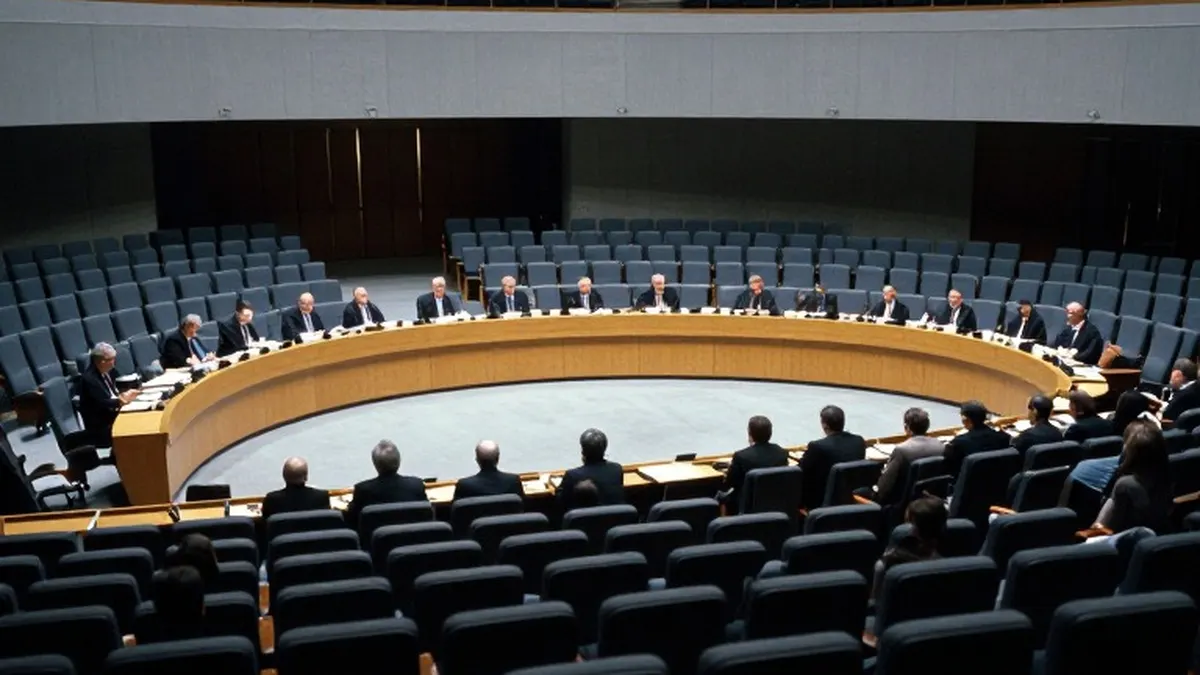
The United Nations COP31 climate talks in Turkey have concluded without a major new agreement to tackle climate change. The failure to reach a deal was driven by deep divisions regarding fossil fuels and the financial support provided to developing nations. Negotiations, which were originally scheduled to end on Friday, extended late into Sunday, marking the longest UN climate conference in history.
The final draft text proved unacceptable to the European Union, Pacific island nations, and other groups because it did not explicitly mention fossil fuels. This omission is significant because fossil fuels are the primary driver of global warming. Additionally, many poorer countries objected to the lack of clear financial commitments from wealthier nations to help them adapt to rising temperatures. This collapse of the main political agreement mirrors the situation seen in Copenhagen in 2009.
UN Secretary General Antonio Guterres, attending his final COP before stepping down, expressed deep disappointment with the outcome. He criticized powerful fossil fuel interests for adopting a strategy similar to Big Tobacco, which he described as distorting science, delaying policy, and blocking action while accumulating profits. Guterres noted that people everywhere are paying the price for these delays.
Delegates were presented with a new draft deal in the early hours of Sunday to break the deadlock. However, the specific phrase 'fossil fuels' was absent from the text. The only indirect reference was a mention of the 2023 COP28 agreement to transition away from fossil fuels in energy systems. Darragh O'Brien, the Irish Minister and EU representative, stated that the EU strongly objected to the lack of ambition. He called it unconscionable for a climate pact to make no mention of fossil fuels.
Other nations, including Panama and the Marshall Islands, also criticized the deal for insufficient action against the pace of climate change. An earlier draft from Monday had mentioned fossil fuels six times, but this was rejected by oil-producing nations. Mohammad Ayoub, the Saudi Arabian delegate, argued that Arab countries engaged in good faith and accounted for a small portion of historical emissions. Russia warned against using slogans regarding coal, oil, and gas, claiming that a rapid move away from these fuels could lead to fuel poverty.
Financial support for adaptation remains a major sticking point. Last year at COP30 in Brazil, nations agreed to triple finance for this purpose. However, this year's deal lacked concrete figures or a baseline for measurement, raising concerns that richer nations would have too much flexibility. Mohamed Adow of Power Shift Africa stated that rich nations and polluting governments cannot keep arriving empty-handed. Miatta Fahnbulleh, the UK Energy Secretary, described the failure as immensely disappointing but said it strengthened the resolve to work with global partners.
The negotiations were led by Australia, creating a dynamic that some observers described as chaotic. Chris Bowen, the Australian Minister and COP31 president, cited unbridgeable red lines and the most complicated geopolitical environment in living memory. He noted that climate impacts are worsening, with 2026 potentially becoming the hottest year on record. Extreme weather events, from European heatwaves to flash flooding in Nepal, have raised the stakes for these discussions.
COP31 was the first annual UN conference to formally discuss the likely overshoot of the 1.5C warming limit agreed upon in the 2015 Paris Agreement. While the Paris deal has driven near-universal climate action, current policies suggest global warming could reach about 2.8C by 2100. The world is likely to exceed 1.5C in the coming years, requiring ambitious technologies to remove carbon dioxide from the atmosphere to bring temperatures back down. Many countries remain committed to this long-term goal, though the necessary technologies do not yet exist at scale.
Despite the failure of the main deal, some progress was made on a just transition mechanism to support workers and communities as economies shift to clean energy. More than 80 countries backed Turkey's target to increase the share of global energy use met by electricity to 35% by 2035. However, questions remain about the effectiveness of the UN consensus-based process in a divided world. UN climate chief Simon Stiell said he would seek advice on potential reforms ahead of COP32 in Ethiopia in November 2027.
Stiell acknowledged that the consensus process fell short on this occasion but maintained that it has worked before, including in Paris. He told delegates that the UN climate process has suffered setbacks before and come back stronger, asserting that it must do so again.